Your Data Is Worth More Than Oil — Here’s How Companies Profit From You
Your data has become one of the most valuable resources in the digital world. This blog explores how companies collect, analyze, and profit from your online behavior through algorithms, advertising, AI systems, and the modern attention economy.

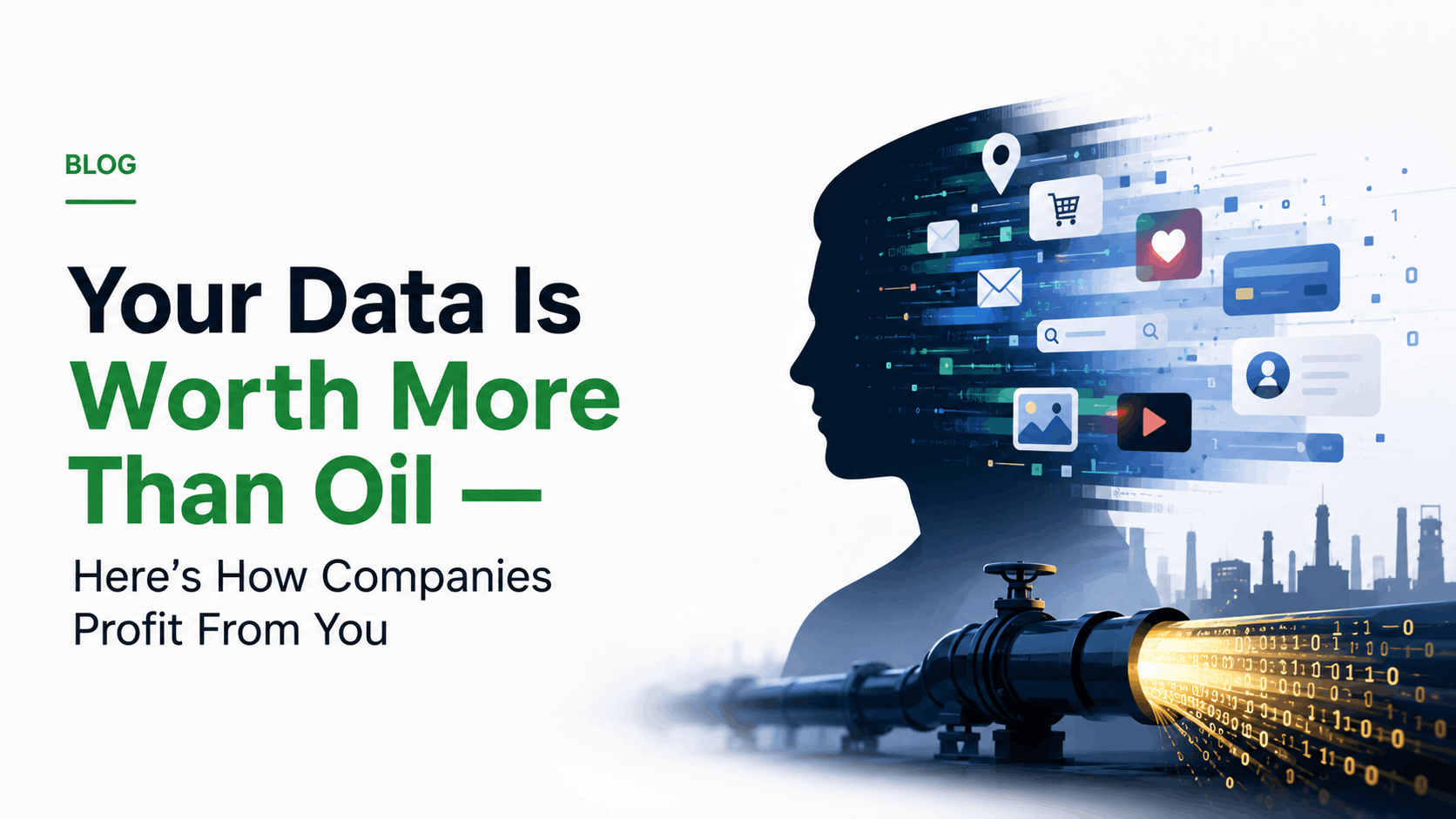
How clicks, searches, apps, algorithms, and digital behavior quietly became one of the world’s most valuable business models
Introduction: You’re Probably Generating Valuable Data Right Now
Right now, while reading this, data is being created.
Not just by you.
By everyone connected to the internet.
Every:
- search
- click
- scroll
- purchase
- location ping
- app interaction
- watch history
- online conversation
Creates digital information.
Most people assume this data is harmless.
Tiny.
Meaningless.
But modern technology companies see something very different.
They see:
- behavioral patterns
- consumer prediction
- advertising opportunities
- recommendation systems
- AI training material
- financial value
And that’s why one phrase became so popular in the technology world:
“Data is the new oil.”
But honestly?
That comparison might actually underestimate how valuable data became.
Because oil gets consumed once.
Data can be reused infinitely.
And in 2026, some of the largest companies on Earth are built almost entirely around collecting, analyzing, and monetizing human behavior.
Which raises an uncomfortable question:
How exactly do companies profit from your data?
Because most people use digital platforms every day without fully understanding what they’re actually exchanging.
The Internet Is Not Really Free
This is one of the biggest misconceptions online.
People say:
- “free apps”
- “free social media”
- “free email”
- “free platforms”
But large-scale technology systems are extremely expensive to operate.
Companies spend billions on:
- servers
- cloud infrastructure
- AI systems
- engineering teams
- data centers
- security systems
So naturally, platforms need revenue.
And if users are not paying directly…
Then something else is funding the system.
In many cases:
that “something” is data.
Your Attention Became a Business Model
Modern internet companies realized something incredibly powerful:
Human attention can be monetized.
The longer users stay on platforms:
- the more ads they view
- the more data they generate
- the more predictable their behavior becomes
This created the modern attention economy.
And data became its fuel.
What Counts as “Your Data”?
Most people imagine personal data as:
- passwords
- banking details
- private messages
But companies collect far more than that.
Modern platforms track:
- search history
- scrolling behavior
- location activity
- clicks
- purchases
- device usage
- viewing time
- app interactions
- engagement patterns
Even small actions become meaningful when analyzed at scale.
The Internet Watches Patterns, Not Just Individuals
One person’s behavior may not seem valuable.
But billions of behavior patterns together become extremely powerful.
Companies use aggregated data to:
- predict trends
- personalize feeds
- target advertisements
- improve recommendation systems
- train AI models
The real value is often not the individual action itself.
It’s the pattern.
Why Companies Want Your Data So Badly
Because prediction is profitable.
If a company can predict:
- what you might buy
- what you might watch
- what keeps your attention
- what influences decisions
Then they can optimize systems around those behaviors.
That creates enormous business value.
Advertising Changed Completely in the Digital Era
Traditional advertising used to be broad.
A company might place the following:
- TV commercials
- newspaper ads
- billboards
And hope the right people see them.
Modern digital advertising works differently.
Now companies can target the following:
- specific interests
- locations
- behaviors
- demographics
- shopping habits
With incredible precision.
That precision depends heavily on data collection.
Your Behavior Became the Product
This is the uncomfortable part many people eventually realize.
On many platforms:
Users are not really the customers.
Advertisers are.
Users generate:
- engagement
- attention
- behavioral data
Which platforms monetize through advertising ecosystems.
Social Media Platforms Perfected This Model
Platforms like
- TikTok
- YouTube
Analyze enormous amounts of behavioral information.
Why?
Because better behavioral understanding improves:
- recommendations
- retention
- advertising performance
And therefore:
revenue.
Algorithms Quietly Study Human Behavior
Every interaction teaches platforms something.
For example:
- how long you watch videos
- which posts you pause on
- what content you ignore
- what triggers engagement
Modern recommendation systems continuously learn from these signals.
That’s why feeds increasingly feel personalized.
Sometimes almost uncomfortably personalized.
AI Made Data Even More Valuable
Artificial intelligence dramatically increased the importance of data.
Why?
Because AI systems improve through training.
And training requires:
massive amounts of information.
Modern AI models consume the following:
- text
- images
- videos
- behavioral patterns
- user interactions
At an extraordinary scale.
Data became fuel for machine learning.
Your Digital Life Became a Behavioral Profile
Over time, platforms build a surprisingly detailed understanding of users.
Not necessarily because users explicitly reveal everything.
But because patterns reveal more than people realize.
Systems can infer:
- interests
- habits
- routines
- shopping behavior
- engagement tendencies
Sometimes even emotional states.
Why Personalized Ads Feel So Accurate
People often joke:
“My phone is listening to me.”
Sometimes it’s not actually listening.
The systems simply became very good at prediction.
Because companies combine:
- browsing behavior
- purchase history
- location signals
- interaction patterns
To build sophisticated targeting systems.
Recommendation Systems Became Addictive
One reason platforms collect data is to maximize engagement.
Algorithms optimize for:
- watch time
- retention
- interaction
- attention duration
The more accurately systems predict user preferences,
the longer users stay.
That creates more monetization opportunities.
Infinite Scrolling and Data Collection Work Together
Every scroll provides additional behavioral signals.
Platforms learn:
- how fast users scroll
- what content slows them down
- which topics trigger reactions
Modern apps continuously collect feedback loops from user behavior.
That feedback improves algorithms.
Data Collection Quietly Powers E-commerce Too
Shopping platforms analyze the following:
- search behavior
- abandoned carts
- product views
- click patterns
- pricing responses
This helps companies:
- personalize recommendations
- optimize pricing
- increase purchases
E-commerce increasingly depends on behavioral analytics.
Smart Devices Expanded Data Collection Everywhere
Today, data collection extends beyond websites.
Modern systems include the following:
- smartphones
- smartwatches
- smart TVs
- voice assistants
- connected cars
The digital ecosystem became deeply interconnected.
That increases both the
- convenience
- data generation
Voice Assistants Created New Privacy Questions
Voice-based systems introduced concerns around:
- audio processing
- cloud storage
- voice analysis
- continuous listening systems
As AI assistants become smarter,
Privacy conversations become more important.
Data Brokers Quietly Became Huge Businesses
One of the least understood parts of the digital economy is data brokerage.
Some companies specialize in:
- collecting
- aggregating
- analyzing
- selling data insights
Most users never interact with these companies directly.
Yet their information may still pass through large data ecosystems.
Why Free Services Rarely Stay Truly Free
If a platform depends heavily on advertising,
Then user engagement becomes critical.
This creates incentives to
- maximize screen time
- increase personalization
- optimize retention
The product increasingly evolves around behavioral optimization.
The Ethical Problem Is Becoming Bigger
Modern systems are becoming extremely good at influencing attention and behavior.
This creates difficult questions:
- How much tracking is acceptable?
- How transparent should platforms be?
- Who owns behavioral data?
- Can users meaningfully control information?
These questions are becoming more important every year.
Governments Started Responding
As data collection expanded globally,
governments introduced:
- privacy regulations
- consent requirements
- transparency laws
- data protection rules
Public awareness around digital privacy continues growing.
Why Most People Still Ignore Privacy
Because data collection feels invisible.
People don’t physically see the following:
- algorithms
- tracking systems
- behavioral analysis
The exchange happens quietly in the background.
Convenience often hides complexity.
The Most Valuable Companies in the World Depend on Data
Many major technology companies built enormous value around the following:
- behavioral prediction
- advertising systems
- engagement optimization
- personalization
Data became one of the most powerful economic assets of the digital age.
Why Data Is More Valuable Than Oil
Oil powers machines.
Data powers:
- algorithms
- AI systems
- recommendations
- digital advertising
- personalization
- prediction systems
And unlike oil:
Data improves when combined and reused.
Its value compounds.
That makes it uniquely powerful.
Is Data Collection Always Bad?
Not necessarily.
Data also enables:
- better recommendations
- fraud detection
- accessibility improvements
- smarter navigation
- medical research
- personalized experiences
The problem is not simply data itself.
The real issue is:
control, transparency, and responsibility.
The Future of Data Collection
Over the next decade, systems may become even more predictive.
AI may increasingly analyze the following:
- emotional behavior
- purchasing tendencies
- communication patterns
- attention cycles
That future creates enormous opportunities.
And enormous ethical concerns.
What People Can Actually Do
Most users cannot completely disconnect from modern technology.
But awareness still matters.
Simple steps help:
- reviewing permissions
- limiting unnecessary tracking
- understanding privacy settings
- using stronger security practices
- thinking critically about digital behavior
Privacy is increasingly becoming digital literacy.
Final Thoughts
The internet evolved into something much larger than information sharing.
It became a massive behavioral economy powered by data.
Every interaction contributes to systems designed to:
- predict
- personalize
- optimize
- monetize
And most of it happens quietly in the background.
That’s why data became one of the most valuable resources on Earth.
Not because companies randomly collect information.
But because understanding human behavior has become one of the most profitable capabilities in modern technology.